
English 
T: +86-21-55896873
E: info@youguard.cn
E: info@youguard.cn
8th Floor, Building 3, 999 Jiangyue Road, Minhang District, Shanghai
Views: 0 Author: Site Editor Publish Time: 2025-09-04 Origin: Site


Material choice determines whether a cover protects or fails — here’s how to pick. The performance of a robot protective cover hinges largely on the materials used. Selecting the right fabric or coating can mean the difference between prolonged equipment life and costly downtime. This article explores key material properties, common options, and industry-specific considerations to help you make an informed decision when choosing robot covers.
Heat resistance is critical in many industrial settings such as welding, forging, or foundries. Materials are rated by their ability to withstand temperatures without degrading or transferring excessive heat to underlying robot parts. Reflective coatings amplify this effect by bouncing radiant heat away, helping maintain cooler internal temperatures.
Measurement methods include standardized tests like ASTM E1354 (Cone Calorimeter) for heat flux, and thermal conductivity ratings to quantify insulation performance. A thermal robot protection cover that combines heat-resistant fibers like aramid with reflective layers can extend robot life significantly in high-temperature zones.
In addition, materials with multi-layered construction often integrate an outer reflective film with inner insulating layers, optimizing both radiant heat reflection and conductive heat reduction. This layered approach is essential in protecting delicate servo motors and electronic components near hot work cells.
Robots operating near chemicals or lubricants require materials that resist degradation and swelling. Acid and alkali resistance prevent fabric breakdown in harsh environments, while oil and solvent compatibility reduce swelling or weakening.
Material datasheets often provide chemical resistance charts outlining exposure limits. Testing under real conditions is recommended to verify compatibility, especially in industries using specialty solvents or aggressive cleaning agents.
For example, polyurethane-coated fabrics excel in resisting oils and solvents, making them ideal in automotive assembly lines, while fluoropolymer coatings may be used in chemical processing plants due to their outstanding chemical inertness.
Joints and articulations demand materials that withstand repeated bending without cracking or tearing. Abrasion resistance prevents wear from contact with tooling or surrounding structures.
Flex fatigue tests measure how many bending cycles a material endures before failure, guiding the selection of fabrics for dynamic zones. Aramid blends and high-performance synthetics typically offer the best balance for robotic covers in motion-intensive applications.
Moreover, reinforcement zones—such as double-layered fabric panels or integrated protective patches—can be strategically placed in high-wear areas like elbow or wrist joints. These reinforcements significantly extend the dynamic life of the cover without adding excessive weight.
Depending on the environment, some covers require full waterproofing to prevent ingress during washdowns, while others benefit from breathable materials that allow moisture vapor to escape, reducing condensation risks.
Materials with low vapor permeability block water and moisture completely, suitable for food and pharma washdown lines. Breathable membranes, such as PTFE laminates, offer selective permeability, balancing protection and internal climate control.
This distinction is especially important in cleanroom environments, where controlling internal humidity without allowing particulate ingress is vital. Selecting the right balance between impermeability and breathability can prevent mold growth and corrosion inside robotic housings.
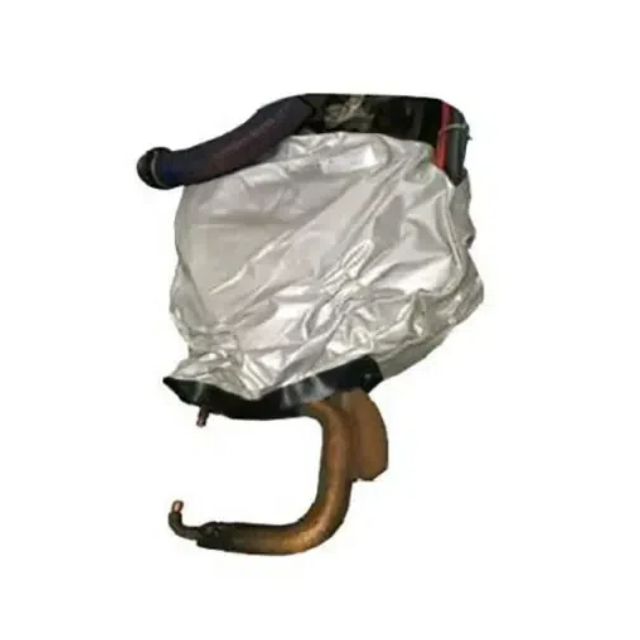
Aramid fabrics like Kevlar or Nomex coated with heat-resistant polymers provide excellent thermal resistance and mechanical durability. ARMATEX-type composites enhance heat shielding with layered structures.
Tradeoffs include higher cost and reduced flexibility compared to standard textiles, but their superior protection is vital in welding cells or foundries. Additionally, these materials tend to be heavier and require precise tailoring to avoid interfering with robotic motion.
These fabrics meet FDA and EU food-contact regulations, avoid PVC to eliminate phthalates, and withstand repeated chemical sanitizing cycles. Polyurethane or TPU coatings offer waterproofing and chemical resistance.
While softer and more flexible, they may have lower heat resistance than aramid fabrics, making them ideal for humid or washdown-heavy environments but less suited for extreme heat. Their compliance with hygiene standards also includes antimicrobial treatments to reduce bacterial growth on surfaces.
Rubber or silicone offers near-perfect sealing and excellent abrasion resistance, often used in harsh chemical or outdoor conditions requiring tight protection.
The downside includes weight and potential stiffness, which may impact robot mobility if not designed carefully. However, modern formulations can be engineered for enhanced flexibility and durability, balancing protection and performance.
Material choice directly influences construction methods:
Seam welding: Preferred for coated fabrics to maintain waterproofing and strength. Heat or ultrasonic welding fuses fabric edges without perforations, preventing leaks.
Stitching: Used in less critical areas but requires seam sealing for waterproof applications. High-tensile threads and reinforced stitches improve seam longevity.
Gasket integration: Essential around access panels or cable passthroughs, often made from silicone or neoprene. These flexible gaskets maintain seal integrity during robot movement.
Windows/viewports: Clear TPU or polycarbonate inserts provide visibility without compromising seal integrity, allowing operators to monitor sensors or indicators.
Well-designed integration of these features ensures that material advantages translate into real-world robot protection.
Automotive forging: Requires aramid-based thermal covers with welded seams for extreme heat and mechanical protection. Reinforced with abrasion-resistant panels in high-contact zones.
Semiconductor cleanroom: Needs low particle-shedding, anti-static materials with cleanroom certification and flexible design to avoid contaminant generation.
Food processing: Demands PVC-free, washable, food-grade fabrics with full waterproofing and antimicrobial properties to comply with strict hygiene regulations.
Mapping materials to industries helps purchasers and engineers quickly identify the right protective solutions tailored to their environment.
Emerging materials combine multiple layers—thermal insulation, chemical resistance, flexibility—into lightweight laminates that improve comfort and performance.
Modular panel systems allow easy replacement of worn sections without full cover swaps, reducing downtime and waste. Advances in nanomaterials and coatings promise enhanced barrier properties with reduced weight and bulk, opening possibilities for thinner, more flexible covers that do not sacrifice protection.
Additionally, smart materials incorporating sensors or conductive threads are beginning to emerge, enabling real-time condition monitoring of robotic covers to predict wear or breach points before failure.
Choosing the right materials for your robot protective cover requires balancing heat and chemical resistance, flexibility, waterproofing, and industry-specific needs. Download our printable “Material Selection Quick Reference” to guide your evaluation process and request sample swatches for hands-on testing.
Shanghai Youguard Automation Technology Co., Ltd provides expert consultation and a wide range of material options to tailor your robot covers precisely to your operational challenges. Contact us today to ensure your robots get the protection they deserve.


