
English 
T: +86-21-55896873
E: info@youguard.cn
E: info@youguard.cn
8th Floor, Building 3, 999 Jiangyue Road, Minhang District, Shanghai
Views: 0 Author: Site Editor Publish Time: 2025-09-05 Origin: Site


Off-the-shelf covers are cheaper — custom Robosuits can save you far more in extreme environments. For factories facing harsh conditions such as extreme heat, corrosive chemicals, or where precise robotic motion is critical, selecting the right protective solution is essential. Shanghai Youguard Automation Technology Co., Ltd offers both modular standard robot covers and fully customized Robosuits designed to meet the most demanding operational challenges, helping you maximize robot uptime and reduce maintenance costs.
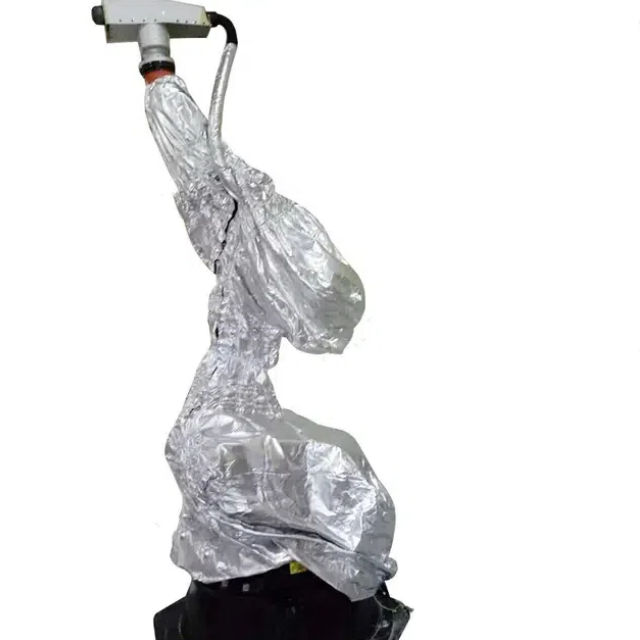
A Robosuit is a tailor-made robotic protective cover engineered specifically to fit the unique geometry and motion patterns of your robot. Unlike standard covers, which offer generic protection, a custom Robosuit provides:
Exact fit: Developed from detailed measurements and motion studies of the robot, ensuring no excess bulk or gaps that might compromise protection or movement.
Motion-preserving design: Materials and joint reinforcements accommodate the full range of robotic movements without causing abrasion or restricting speed. For example, flexible bellows or layered fabrics may be integrated at joint sections to maintain full articulation.
Specialized material selection: Depending on the environment, options include high-temperature resistant fabrics, chemical barriers, electrostatic discharge-safe materials, or antimicrobial coatings for hygiene-sensitive industries.
The typical development process includes an initial site survey, 3D scanning or motion capture, prototype fabrication, and Factory Acceptance Testing (FAT) to guarantee performance and fit before delivery. This customization ensures the Robosuit perfectly matches the demands of your specific production environment.
Furthermore, Robosuits can be engineered to integrate with other robotic accessories, such as cable management systems or sensor housings, allowing for seamless operation without interference. This level of integration often exceeds what standard covers can offer.
Standard robot covers are pre-engineered solutions designed to fit common robot models. They offer several benefits:
Lower upfront cost: Due to mass production and standard sizing, these covers come at a more affordable price point, making them attractive for less demanding applications or budget-conscious projects.
Faster delivery: Off-the-shelf availability accelerates installation timelines, reducing lead time from purchase to deployment.
Modular and replaceable: Standard parts and sections can be swapped out quickly, facilitating easier and more cost-effective maintenance.
However, in extreme or highly specialized environments, these covers may fall short:
Fit gaps: Generic designs may leave small openings at joints or interfaces, increasing risks of dust, chemicals, or heat ingress that can damage sensitive components.
Motion constraints: Less tailored materials and designs might restrict robotic range of motion or cause premature wear due to friction or abrasion.
Limited material options: Standard covers typically use a fixed set of materials, lacking the specialized protective properties required for high-heat, corrosive, or static-sensitive applications.
For instance, in a foundry environment where temperatures soar and molten splatter is a hazard, standard covers might degrade quickly, whereas a custom Robosuit with high-temp resistant fabrics and tailored reinforcements can extend service life significantly.
Choosing between standard covers and custom Robosuits depends on several key considerations:
Environmental extremes: Environments with high temperatures, chemical exposure, abrasive particulates, or moisture hazards generally require custom materials and seals only available with Robosuits.
Robotic motion: Robots performing highly complex, precise, or rapid tasks need covers designed to maintain full mobility without resistance or interference.
Certification and compliance: Applications in food processing, pharmaceuticals, or cleanroom settings often require materials and designs that meet specific hygiene and safety certifications.
Production uptime cost: When downtime is expensive or disruptive, investing in custom solutions that reduce maintenance needs and extend robot life often pays for itself in the long term.
Moreover, consider your production line’s flexibility. If your robotic tasks or models frequently change, a more modular standard cover system might offer better adaptability. However, if you have a fixed robot setup with demanding environmental challenges, the upfront investment in a custom Robosuit typically results in greater operational efficiency.
While custom Robosuits typically carry higher initial costs, the long-term benefits often justify the investment:
Reduced downtime: Better protection and fit reduce unexpected stops caused by damage, contamination, or overheating.
Extended part life: High-quality materials and tailored design minimize wear on both the cover and the robot’s mechanical and electronic components.
Lower maintenance frequency: Features such as easy access panels and durable construction cut maintenance hours and labor costs.
Improved safety and compliance: Minimizing contamination or exposure risks prevents costly regulatory penalties, recalls, or production interruptions.
For example, in automotive welding plants, downtime can cost thousands per hour. A custom Robosuit that prevents dust ingress and withstands welding sparks may reduce downtime drastically, offsetting its initial cost within months.
Performing a thorough Total Cost of Ownership (TCO) analysis helps decision-makers weigh upfront expenses against lifetime savings, ensuring informed procurement decisions aligned with business goals.
Launching a successful custom Robosuit project involves several critical steps:
Comprehensive site survey: Evaluating environmental hazards, robot model, operational workflows, and existing protection gaps.
Motion capture and 3D scanning: Capturing detailed robot geometry and movement paths to design a suit that fits precisely without hindering operation.
Material selection: Choosing fabrics and coatings based on hazard analysis, regulatory requirements, and expected wear conditions.
Prototype development: Creating physical samples or mock-ups for fit and function validation with real-world testing.
Factory Acceptance Testing (FAT): Conducting rigorous assessments to verify performance, durability, and ease of maintenance before full production.
This detailed approach ensures the final Robosuit solution enhances robot performance, reduces downtime, and meets compliance needs.
Choosing between standard robot covers and custom Robosuits requires balancing cost, environmental demands, and operational priorities. For extreme or highly specialized conditions, investing in a custom Robosuit safeguards your equipment, reduces downtime, and lowers lifecycle costs. Standard covers remain an excellent choice for less demanding environments or tight budgets, providing modularity and rapid deployment.
We recommend conducting a site-specific evaluation using a checklist of your operational conditions, motion complexity, and compliance needs. Reach out to Shanghai Youguard Automation Technology Co., Ltd for a personalized site survey and detailed quotation. Our team will help you identify the optimal robotic covers tailored to your production goals, ensuring maximum ROI and operational reliability.


