
English 
T: +86-21-55896873
E: info@youguard.cn
E: info@youguard.cn
8th Floor, Building 3, 999 Jiangyue Road, Minhang District, Shanghai
Views: 0 Author: Site Editor Publish Time: 2025-09-02 Origin: Site


Environmental damage is a leading cause of unexpected downtime in industrial automation. Dust, moisture, heat, and chemical contaminants silently degrade critical robot components, resulting in costly repairs and lost productivity. Implementing effective robot protection through specialized protective covers can prevent these failures and significantly extend the life of your robotic equipment. This article explores the common environmental hazards faced by robots, explains how protective covers work, and highlights key factors to consider when selecting the right protection for your operations. Discover how Youguard’s Robot Protection Series delivers reliable solutions tailored for demanding industrial settings.
Industrial robots are intricate machines with many vulnerable components exposed to harsh factory conditions. Damage from environmental factors often translates to unplanned downtime, expensive part replacements, and operational inefficiencies.
Joints and encoders rely on precise movement and accurate feedback signals, making them highly susceptible to dust infiltration and moisture. Cables and wiring are vulnerable to abrasion and chemical exposure, which can cause electrical failures. End-of-arm tooling, constantly in contact with the production environment, also faces accelerated wear and contamination risks. Without adequate protection, these failure points increase maintenance frequency and operational costs.
For example, dust particles entering the joints can cause increased friction, which not only wears down mechanical components faster but also leads to inaccurate robot positioning. Similarly, encoders that send position feedback signals may become unreliable if exposed to contaminants, potentially leading to production errors or robot stoppage. Cables exposed to oil mist or corrosive chemicals can develop cracks or shorts, resulting in unexpected shutdowns or even safety incidents.
Beyond direct expenses, environmental damage compromises product quality by causing defects due to contamination or erratic robot behavior. Additionally, sudden robot malfunctions pose safety hazards to workers and disrupt production flow, impacting overall workplace safety and compliance.
Quality issues caused by poorly protected robots may result in rejects, rework, or customer complaints, damaging the reputation of the manufacturing facility. From a safety perspective, unplanned robot movements or failures can expose operators to physical risks, emphasizing the need for robust robot protection measures.
Recognizing the specific environmental threats helps determine the right type of robot protective cover.
Dust and abrasive particles can accumulate inside moving parts, increasing friction and wear. Oil mist, common in welding and machining areas, leaves sticky residues that attract contaminants. Dustproof robot covers provide an effective barrier to these hazards, maintaining cleaner and smoother operation.
Dust can come from raw materials, grinding, sanding, or general factory floor activity, making it almost impossible to keep robots completely clean without protective covers. The abrasive nature of some particles can accelerate mechanical degradation, especially in high-speed or high-precision robots.
Oil mist and smoke from welding create a challenging environment where particles stick to robot surfaces, attracting more dust and interfering with sensors or actuators. Protective covers designed to resist oil and particulate accumulation ensure that robots continue to operate smoothly with minimal maintenance.
Heat exposure and welding spatter can melt or damage robot components, shortening their operational life. Protective covers made with heat-reflective and flame-retardant materials shield robots from these extreme conditions, preserving their functionality and safety.
Welding spatter, tiny molten droplets ejected during welding, can cause localized damage or start fires if the robot’s surface is not properly protected. In addition, radiant heat emitted from welding arcs can raise the surface temperature of robot parts, degrading insulation and electronics over time.
Using materials with excellent thermal insulation and spatter resistance protects robots in welding cells, reducing the risk of fire hazards and costly downtime due to repairs.
Many industries require frequent cleaning with water or chemicals, which can corrode unprotected robot surfaces and electrical parts. Waterproof robot covers prevent moisture ingress and chemical damage, ensuring continuous reliable performance in wet or corrosive environments.
In food processing, pharmaceutical, and automotive industries, regular washdowns are mandatory to meet hygiene standards. Exposure to water jets and harsh cleaning agents without proper protection can cause corrosion, short circuits, and mechanical failures in robots.
Waterproof and chemical-resistant covers not only block moisture but also protect against acidic or alkaline cleaning solutions, prolonging the service life of robots operating in these environments.
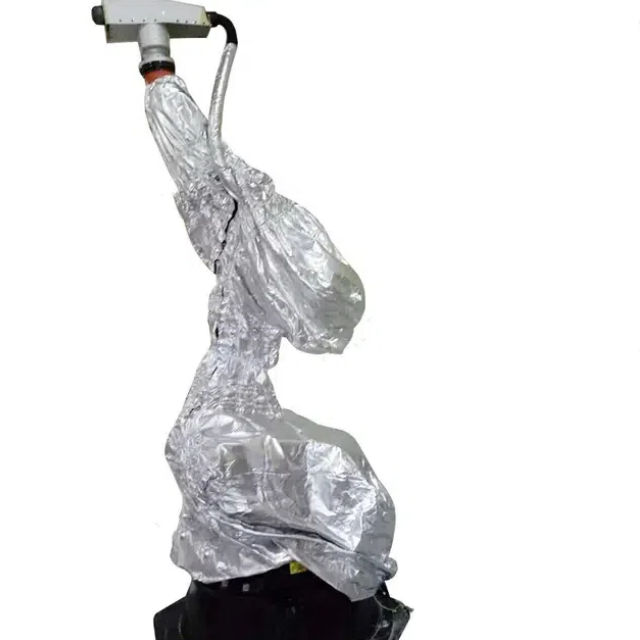
Robot protective covers combine material science and design to defend against environmental stressors.
High-quality covers act as sealed barriers preventing dust, liquids, and contaminants from reaching sensitive components, reducing maintenance needs and extending service intervals.
Seam construction and fastening methods are critical to ensure complete sealing. Overlapping seams and tight closures prevent ingress points that would otherwise allow contaminants inside. This effective barrier function helps maintain robot cleanliness and performance without frequent downtime for cleaning.
Specialized fabrics reflect radiant heat and provide insulation, protecting electronic and mechanical parts from damage caused by spatter and welding heat.
These materials may incorporate reflective coatings that bounce heat away from the robot’s surface or insulating layers that slow down heat transfer. The right combination protects the robot’s internal components from rapid temperature changes and localized overheating.
Spatter resistance involves tough outer layers that can withstand molten metal droplets without puncturing or melting, critical for welding applications where spatter frequency is high.
Anti-static coatings safely dissipate harmful static electricity, while chemical-resistant layers protect against corrosive substances, both crucial in sensitive production environments.
Static discharge can damage delicate electronic sensors or controllers, leading to costly failures or inaccuracies. Anti-static robot covers prevent charge buildup by using conductive fibers or coatings.
Chemical resistance protects against solvents, paints, acids, or alkalis, preventing degradation of the cover material itself and the underlying robot components. This ensures reliability in environments such as paint shops, chemical plants, and laboratories.
Assessing the right performance metrics ensures the cover will provide lasting protection without hindering robot operation.
Durability under constant movement is critical. Covers must resist cracking and tearing (flexural failure resistance), withstand surface wear (abrasion ratings), and offer predictable service life based on operating conditions.
Robot arms move continuously with complex articulation, so covers need to endure bending, stretching, and compression without damage. Materials tested to meet these flexural standards ensure longer service intervals.
Abrasion resistance guarantees that contact with rough surfaces or sharp edges does not degrade the protective layer, maintaining integrity over time.
Service life indicators provided by manufacturers help users plan timely replacements before the cover fails, ensuring uninterrupted protection.
Covers must allow full robot mobility and not interfere with sensors or cameras. Precise fit and material flexibility are key to maintaining robot performance.
Poorly fitting covers can restrict motion or cause friction, impacting speed and precision. Materials should be lightweight and flexible to follow robot movements naturally.
Additionally, robot sensors such as cameras, LIDAR, or proximity detectors must remain unobstructed. Some covers integrate transparent or sensor-friendly zones to avoid interference, ensuring automation accuracy is not compromised.
Investing in robust robot protection delivers tangible savings and operational benefits.
Protective covers lower failure rates, reducing spare parts consumption and emergency repairs. Planned maintenance becomes easier and less disruptive.
By extending the lifespan of joints, cables, and encoders, companies can cut spare parts inventory and reduce downtime caused by unexpected breakdowns. This predictability allows better scheduling of service interventions, optimizing workforce and budget.
Highlighting benefits like increased uptime, enhanced safety, product quality, and regulatory compliance strengthens the business case beyond simple cost reduction.
Procurement decisions often focus on initial cost, but presenting a comprehensive ROI analysis that includes reduced downtime, fewer safety incidents, improved product quality, and compliance with industry standards will better justify investment in premium robot protection solutions.
Robust robot protection is vital to maximizing uptime and extending the lifespan of industrial robots exposed to harsh environments. Youguard’s Robot Protection Series offers waterproof, dustproof, heat-resistant, and anti-static protective covers designed to shield critical robot components from damage. Tailored to fit leading robot brands such as ABB, KUKA, and FANUC, our solutions help factories sustain consistent automation performance while minimizing maintenance downtime. For reliable, high-performance robot protective covers that safeguard your investment, contact us today at Youguard.


