
English 
T: +86-21-55896873
E: info@youguard.cn
E: info@youguard.cn
8th Floor, Building 3, 999 Jiangyue Road, Minhang District, Shanghai
Views: 0 Author: Site Editor Publish Time: 2025-09-08 Origin: Site


For washdown lines and humid plants, a waterproof cover can be the difference between uptime and constant repairs. In industries such as food processing, pharmaceuticals, and other hygiene-sensitive manufacturing, protecting robots from water, chemicals, and moisture exposure is critical to maintaining production reliability and safety. Shanghai Youguard Automation Technology Co., Ltd specializes in manufacturing high-quality waterproof robot covers designed to withstand rigorous washdown environments while meeting strict industry standards and regulatory requirements.
Waterproofing in robot covers involves creating a sealed environment that prevents liquid ingress, even during high-pressure cleaning procedures typical in washdown processes. Achieving this requires attention to various components:
Seams: Unlike standard stitched seams, which leave needle holes vulnerable to water penetration, waterproof robot covers utilize welded, heat-sealed, or ultrasonically bonded seams. This technique fuses fabric edges together, creating a continuous waterproof barrier.
Zippers and Fasteners: Conventional zippers allow water entry; therefore, waterproof covers use specialized waterproof zippers or overlapping flaps sealed with hook-and-loop fasteners, magnetic strips, or industrial-grade adhesives. These fasteners maintain accessibility for maintenance while preserving waterproof integrity.
IP-Like Performance: Although robot covers are rarely subjected to formal Ingress Protection (IP) testing, many waterproof covers meet or exceed performance equivalent to IP54 or higher. This ensures resistance to water sprays from all directions and prevents ingress into sensitive electronic and mechanical components.
This combination of sealing technologies protects robots effectively in environments requiring frequent or intense water exposure.
Material selection is a cornerstone of waterproof robot cover performance and safety:
Food-grade fabrics: Compliant with FDA, EU food contact regulations, or similar certifications, these fabrics prevent chemical contamination and bacterial growth. They often undergo rigorous testing for toxic substances and surface finish smoothness.
PVC-free: Increasingly, industries prefer PVC-free materials due to concerns over phthalates and plasticizer migration. Alternatives such as polyurethane (PU) or thermoplastic polyurethane (TPU) coatings offer superior flexibility and environmental safety.
Washable and Chemical-Resistant: Materials must resist degradation from detergents, sanitizers, acids, and alkalis used in cleaning and disinfection cycles. High abrasion resistance extends service life even under aggressive cleaning regimens.
Together, these material characteristics ensure long-lasting protection that complies with hygiene standards critical in food and pharmaceutical manufacturing.
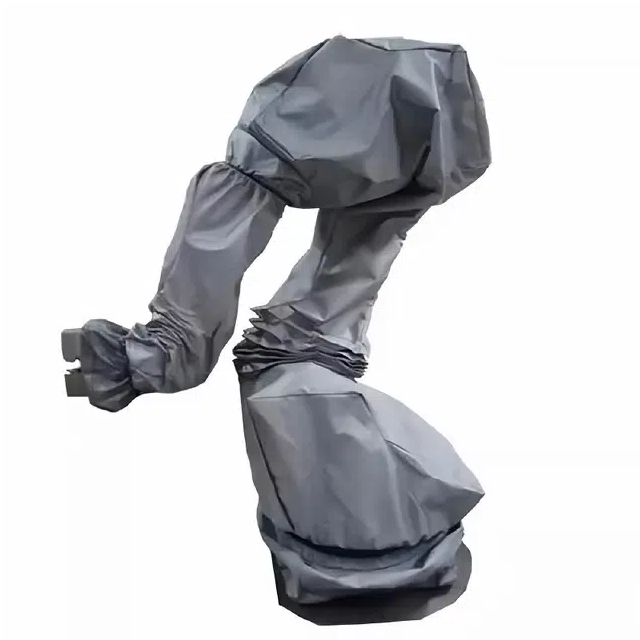
Robots operating in washdown or humid environments face numerous water-related threats:
High-pressure washdowns: Water jets at pressures of 1000 psi or more can force liquid through improperly sealed seams, fasteners, or weak points.
Spray angles and movements: Dynamic spray angles combined with robot movement mean seals must be multi-directionally waterproof. Water can infiltrate through flexible or moving joints if not properly sealed.
Condensation: Temperature fluctuations within robot enclosures often lead to internal condensation, which can corrode electrical components and metal parts if not properly drained or ventilated.
Coolant splashes: In some processes, robots are exposed to chemical coolants or lubricants that can deteriorate standard materials and seals over time.
Addressing these threats requires advanced design features tailored to the specific operating environment.
Even the most robust waterproof robot cover can fail if vulnerable ingress points are overlooked:
Teach pendants and control interfaces: These operator interaction points often require flexible, sealed cable boots or specialized enclosures to prevent water entry without hindering functionality.
Cable entries: Multiple cables running through the cover require gasketed or sealed passthroughs that maintain waterproof integrity while allowing movement and connectivity.
Joint interfaces and flexible sections: These complex moving parts demand materials and designs such as bellows, expandable membranes, or layered seals to accommodate motion without compromising protection.
Careful engineering of these areas is essential to prevent water ingress that can lead to electrical faults or corrosion.
Selecting a reliable waterproof robot cover means verifying the presence of key material and construction elements:
Coated fabrics: Durable waterproof coatings such as TPU or PU provide excellent water resistance, flexibility, and chemical resistance. They should also exhibit UV resistance for outdoor or variable-light environments.
Welded seams: Heat-welded seams form a continuous water barrier, eliminating leakage risks common with stitched seams.
Gasketed access panels: These panels allow maintenance access while preserving the sealed environment. Quality gaskets prevent water ingress even under pressure.
Quick-drain design: Features such as angled surfaces, integrated drainage channels, or venting systems help evacuate any infiltrated water or condensation quickly, reducing the risk of damage.
These combined features ensure long-term waterproof performance in demanding washdown conditions.
Industries such as food processing and pharmaceuticals require robot covers that support rigorous regulatory demands:
Food industry hygiene: Covers must resist microbial growth, be easy to sanitize, and prevent contamination. Certifications and testing ensure suitability for food contact or proximity.
Cleanroom compatibility: Low particle shedding, antistatic properties, and materials compliant with ISO cleanroom classes ensure no compromise to sensitive manufacturing processes.
Clean-In-Place (CIP) systems: Compatibility with CIP means robots and their covers can be cleaned without disassembly, improving uptime and compliance with sanitation protocols.
Selecting covers that align with these standards is crucial for passing audits and maintaining safe production environments.
Choosing the right protection involves evaluating:
Exposure frequency: Continuous or daily washdowns necessitate fully waterproof covers. Occasional moisture exposure might be managed with water-resistant or splash-proof alternatives.
Washdown pressure: High-pressure cleaning demands reinforced sealing, robust materials, and welded seams.
Certification requirements: Compliance with food safety, pharmaceutical GMP, or cleanroom standards may dictate specific materials or construction techniques.
Cost-benefit analysis: Weigh the cost of waterproof covers against potential downtime and repair costs from water damage.
A detailed on-site assessment with professional guidance ensures the selected solution fits operational realities and compliance demands.
Waterproof robot covers are essential for protecting industrial robots in washdown, humid, and hygiene-critical environments, especially within food processing and pharmaceutical manufacturing. Properly designed covers that feature sealed seams, food-grade and PVC-free materials, gasketed access, and quick-drain systems prevent costly downtime and equipment failure caused by water ingress and contamination. Shanghai Youguard Automation Technology Co., Ltd offers a comprehensive range of waterproof robot covers tailored to meet the strictest industry standards and operational challenges. Contact us today for a detailed risk assessment and sample testing to ensure your robot protection strategy aligns perfectly with your production needs.


