
English 
T: +86-21-55896873
E: info@youguard.cn
E: info@youguard.cn
8th Floor, Building 3, 999 Jiangyue Road, Minhang District, Shanghai
Views: 0 Author: Site Editor Publish Time: 2025-08-21 Origin: Site


A machine-tending cell exposed to coolant mist and blast dust requires different protection strategies than a welding cell. Understanding these unique challenges is essential to selecting the right waterproof robot cover or dustproof robot cover that ensures long-term reliability and uptime. This guide outlines key considerations for plants operating in wet or dusty environments and explains how Youguard’s advanced robot protection solutions help maintain your equipment’s performance.
Before specifying protective covers, it’s important to assess the environmental conditions the robot faces. This involves classifying the exposure based on internationally recognized standards.
Ingress Protection (IP) ratings provide a useful framework to gauge the level of protection required. The first digit in the IP code relates to dust protection, ranging from no protection (0) to complete dust tightness (6). The second digit indicates liquid protection, from no water protection (0) to immersion (8).
For dusty environments, such as foundries or abrasive material handling, a dustproof robot cover with an IP rating of 5 or 6 is critical to prevent fine particles from damaging sensitive components. Conversely, in wet environments with washdowns or coolant mist, waterproof robot covers rated IP67 or higher ensure liquid ingress is effectively blocked.
Often, plants require both protections simultaneously. For example, food processing or pharmaceutical lines may face regular washdowns combined with airborne dust or powders. Selecting covers that meet the combined dust and water protection standards is key to long-term robot health.
Additionally, understanding the washdown type is essential: light spray cleaning requires different material performance than high-pressure or chemical washdowns. Identifying these nuances early helps select appropriate fabric coatings and structural reinforcements.
The choice of fabric and coatings largely determines the protective cover’s effectiveness and durability.
Laminated polyester fabrics provide a robust waterproof barrier with mechanical strength suitable for industrial settings. These laminates prevent water and dust ingress while maintaining flexibility.
Microporous membranes are breathable fabrics that block liquids and particulates but allow moisture vapor to escape. This reduces condensation inside the cover, protecting sensitive electronics and preventing mold growth.
Hydrophobic coatings repel water by causing it to bead and roll off surfaces, while oleophobic coatings resist oil and grease. Both are valuable in environments with coolant mist, oils, or oily dust to maintain cover cleanliness and functionality.
Inquire with vendors about durability tests such as hydrostatic head pressure resistance, abrasion resistance, and chemical exposure tolerance to verify claims. High-quality coatings often come with certifications demonstrating compliance with industry standards.
Even the best materials can fail without proper design features.
Seams are potential weak points where dust or water can penetrate. Look for welded or sealed seams rather than stitched ones to maintain waterproof integrity.
Closures such as zippers or Velcro should be covered with storm flaps or designed to prevent ingress. Gaskets around cable entries or joints ensure dust and water cannot sneak in through gaps.
Drainage paths integrated into the cover design help channel any incidental moisture away from critical components, preventing pooling that could lead to corrosion or electrical faults.
Seam welding technologies such as RF (radio frequency) welding or ultrasonic welding provide strong, durable seals suitable for industrial use. Properly designed gasket materials must remain flexible over time and resist chemical degradation.
Pressure differentials caused by temperature changes can stress covers and cause them to deform or tear. Vents or breathers equipped with filters allow air exchange without permitting dust or water ingress, maintaining cover shape and integrity over time.
Such vent designs also help dissipate heat buildup inside the cover, prolonging robot and electronics lifespan.
Consider vent placement carefully to avoid exposure to direct sprays or dust jets. Some vent membranes combine hydrophobic properties with particulate filtration to maintain protection while balancing pressure equalization.
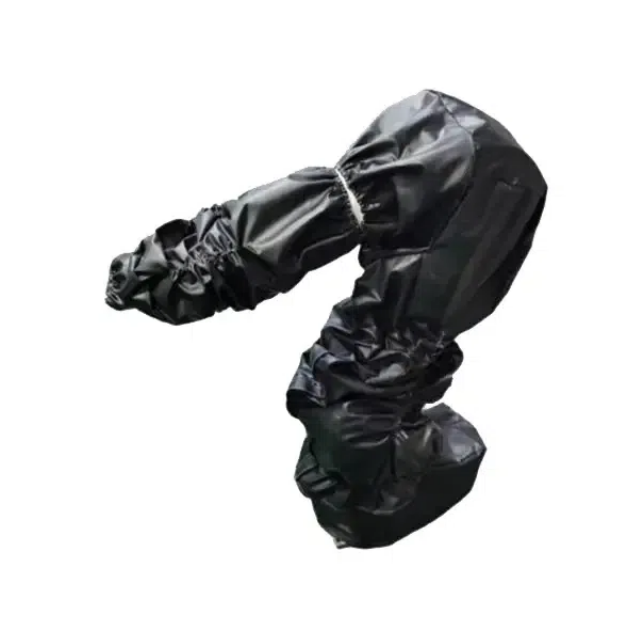
In many industries, regular cleaning is mandatory to meet hygiene and safety standards.
Waterproof robot covers must withstand exposure to cleaning agents such as detergents, disinfectants, and sanitizers without degrading or losing their protective properties.
Temperature tolerance is equally important, as washdown processes can involve hot water or steam. Selecting materials and coatings that maintain integrity under repeated cleaning cycles ensures continuous protection.
Materials used in Youguard covers resist degradation from common industrial chemicals, including caustics and acids, extending service life and maintaining safety compliance.
Consider whether the protective cover can be repaired in the field or if replacement is necessary after damage. Materials that allow patching or sealing extend service life and reduce operating costs.
Youguard’s covers are designed for durability and ease of maintenance, with options for repair kits or modular panels to facilitate quick fixes onsite.
Field repairability also depends on ease of access and modular design, which reduce downtime and maintenance costs in busy production environments.
Validating protective covers before full-scale use helps avoid costly failures.
Conduct water spray tests to check for leaks at seams, closures, and cable entries. Dust challenge tests, using fine particulate exposure, verify the cover’s sealing effectiveness.
Regular inspection checkpoints during operation should focus on wear signs, seam integrity, and flexibility. Early detection of damage allows timely maintenance.
Youguard provides test samples and guidance to assist in thorough evaluation before committing to large orders, ensuring the best fit for your operational environment.
Additional testing may include UV resistance for outdoor use, flame retardancy for welding applications, and mechanical stress tests to simulate robot movement.
Proper installation and maintenance are just as important as the cover’s material and design. Training plant personnel on correct installation, inspection routines, and cleaning protocols helps maximize protective cover performance.
Detailed documentation from Youguard supports this process, providing clear guidelines on handling, repair, and replacement schedules to ensure optimal protection and service life.
Selecting the right waterproof robot cover or dustproof robot cover is essential for protecting robots in harsh wet and dusty conditions. Youguard offers advanced robot protection solutions engineered to meet rigorous industry standards, providing peace of mind and maximizing your robot’s uptime. Request material samples or test covers today and discover how our products can safeguard your automation investments.


