
English 
T: +86-21-55896873
E: info@youguard.cn
E: info@youguard.cn
8th Floor, Building 3, 999 Jiangyue Road, Minhang District, Shanghai
Views: 0 Author: Site Editor Publish Time: 2025-09-08 Origin: Site


Can forced-air robot covers prevent overheating and particle ingress? This question becomes critical when robots operate in high-temperature or dusty environments such as welding cells, foundries, or abrasive spray booths. Unlike standard passive protective covers, robot covers equipped with ducting ports actively manage internal temperatures and airflow, ensuring that robots remain cool and free from contaminants. Shanghai Youguard Automation Technology Co., Ltd provides advanced thermal robot protection covers featuring innovative ducting solutions designed to optimize robot performance even in the harshest industrial conditions.
Robot covers with ducting ports are engineered protective housings that incorporate strategically placed intake and exhaust ports. These ports facilitate controlled airflow through the robot’s enclosure, often arranged to create zoned airflow paths targeting heat-sensitive components. Typical components include:
Intake ports: Connected to filtered air supply or plant HVAC systems, bringing in clean, cool air.
Exhaust ports: Designed to expel hot or contaminated air away from the robot.
Zoned airflow channels: Internally segmented paths that direct airflow to specific hot spots like joints, servos, and controllers.
In many designs, fans or blowers may be integrated or connected externally to ensure adequate air volume. The combination of forced-air circulation and effective filtration forms the foundation for maintaining a stable, clean environment inside the robotic cover.
Traditional robot protective covers act as static barriers against dust, debris, and moisture but do not actively control internal conditions. In contrast, ducting-port covers integrate mechanical or plant-supplied airflow to:
Actively remove heat generated by robot components.
Maintain positive pressure inside the enclosure, reducing contaminant ingress.
Adapt airflow dynamically based on operational demands.
This active approach significantly enhances thermal regulation and cleanliness compared to passive covers, which can trap heat and allow dust accumulation, risking component failure and increased maintenance. Additionally, passive covers sometimes cause moisture buildup from condensation due to temperature differentials, which ducted covers can prevent by maintaining air circulation.
Robotic joints, servo motors, and electronic controllers are heat-intensive components prone to overheating during prolonged or heavy-duty operation. Ducting-port robot covers direct airflow specifically to these hotspots, ensuring adequate cooling exactly where needed. This targeted cooling prevents temperature spikes that can degrade lubrication, reduce electronics lifespan, or trigger automatic shutdowns.
For example, servo motors generate considerable heat during continuous motion; cooling these efficiently prevents thermal overload and maintains optimal torque output. Similarly, controllers with dense electronic circuitry benefit from steady airflow that dissipates heat, reducing the risk of component failures due to overheating.
By creating continuous airflow paths, ducting ports prevent the formation of stagnant air pockets or hot spots inside the robot cover. This balanced thermal environment maintains consistent internal temperatures, which is crucial for precise and reliable robot movements. Stable temperatures also reduce thermal cycling stress on materials and electronics, extending overall service life.
Many ducting-port covers incorporate temperature sensors integrated with the airflow system to monitor and adjust ventilation dynamically. This feedback control ensures the robot operates within safe temperature thresholds, optimizing both performance and energy efficiency.
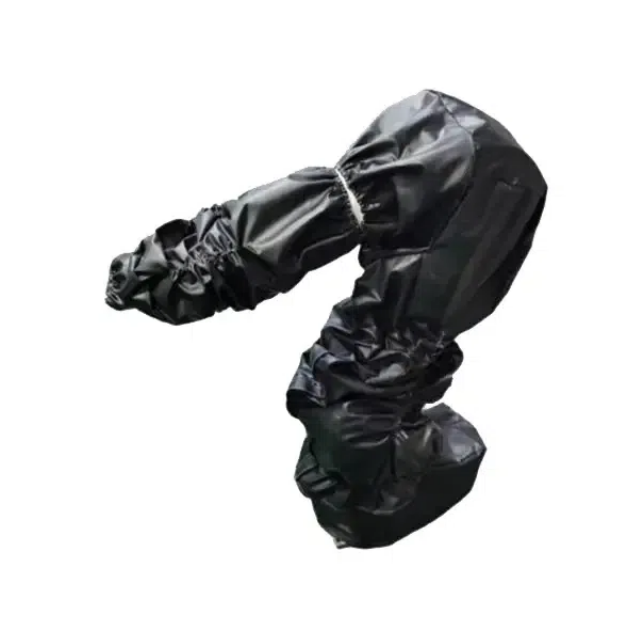
Ducting-port covers often maintain a slight positive air pressure inside the enclosure relative to the outside environment. This positive pressure forces air outward through any gaps or seals, preventing dust and contaminants from entering the protective housing. Combined with filtered air intakes, this approach effectively keeps particulate matter from settling on sensitive components.
Filters vary from basic mesh screens to HEPA-grade filters, depending on the contamination level and industry standards. For example, pharmaceutical or food-grade facilities require higher filtration to comply with hygiene regulations, whereas foundries may prioritize robust coarse filtration against heavy particulate loads.
These advanced robot covers can integrate with existing plant HVAC infrastructure or local filtration units, leveraging centralized air treatment for higher efficiency. The filtered, conditioned air supplied to the intake ports enhances contamination control while simplifying maintenance. Integration also allows for monitoring and adjustment of airflow parameters in real time, aligning with production needs.
Moreover, some setups include the option of recirculating internal air through portable filtration units, offering additional flexibility where plant HVAC integration is limited. This modularity enables tailored solutions for retrofit projects or facilities with diverse environmental challenges.
Ducting-port robot covers come with customizable features including:
Port sizing: Matched to airflow requirements to optimize cooling without excess energy use. Proper sizing is critical to balance air velocity and volume for effective heat dissipation.
Flexible ducts: Allow adaptable routing of air supply and exhaust to accommodate robotic arm movement. Flexible materials resistant to heat and chemicals ensure durability.
Quick-connect fittings: Facilitate fast installation and maintenance, reducing downtime during filter changes or duct inspections.
Sensor passthroughs: Designed openings sealed with gaskets or membranes to allow sensor cables and pneumatic lines to enter without compromising enclosure integrity. These passthroughs preserve the airtightness and positive pressure environment while supporting complex robotic functions.
These design elements ensure that the cover’s airflow management does not hinder robot functionality or maintenance access.
Modular access panels and removable sections enable easy servicing of both the robot and the ducting system. This minimizes downtime for filter changes, duct cleaning, or sensor adjustments. The covers are designed to balance airtightness for airflow control with practical usability for operators and maintenance technicians.
User-friendly design considerations include tool-less panel removal, color-coded ducts for quick identification, and integrated cable management to prevent airflow obstructions. These features simplify routine maintenance and encourage adherence to preventive care schedules.
Industries with extreme thermal loads or particulate pollution benefit most from ducting-port robot covers:
Welding cells: High heat and sparks necessitate thermal management and contamination barriers. The active airflow system also helps dissipate fumes and gases.
Foundries: Molten metal and heavy dust require robust protective airflow systems to prevent damage and maintain robot uptime.
Laser cutting: Precise temperature control preserves delicate electronics, preventing signal loss or malfunctions.
Slurry or abrasive spray booths: Dust and particulate exclusion is critical to maintain servo and sensor function, preventing abrasive wear.
In these environments, robotic downtime due to overheating or contamination can halt production lines for hours or days, incurring significant costs. The upfront investment in ducting-port robot covers quickly pays off by minimizing these losses through enhanced reliability and reduced maintenance frequency.
For robots operating in challenging environments, conventional passive covers often fall short of providing adequate thermal regulation and contamination control. Robotic covers with ducting ports, like those offered by Shanghai Youguard Automation Technology Co., Ltd, combine advanced airflow management and filtration integration to keep robots cool and clean, ensuring reliable, long-lasting performance. To address your facility’s unique heat and contamination challenges, contact us today for a technical consultation or a site-specific thermal and pollution assessment.


