
English 
T: +86-21-55896873
E: info@youguard.cn
E: info@youguard.cn
8th Floor, Building 3, 999 Jiangyue Road, Minhang District, Shanghai
Views: 0 Author: Site Editor Publish Time: 2026-06-14 Origin: Site


Industrial automation operates within highly sensitive and hazardous environments. Facilities handling electronics manufacturing, automotive painting, or precision powder coating face continuous, invisible threats. Electrostatic discharge (ESD) and aggressive particle attraction routinely compromise these automated operations. Standard fabrics generate static electricity naturally through continuous robotic articulation. We call this phenomenon triboelectric charging. It leads directly to localized micro-arcing, severe sensor degradation, and compromised product quality. Instead of reacting to sudden equipment failures, modern facilities must shift their approach entirely. Transitioning to a specialized Robot Protective Cover moves the maintenance strategy from reactive repairs to preventative risk mitigation. This article equips operations and engineering leaders with essential technical criteria. You will learn how to accurately evaluate, justify, and specify anti-static protection for automated lines. Mastering these material and implementation concepts ensures seamless production, extends asset lifecycles, and maintains rigorous quality control protocols across your facility.
Anti-static covers neutralize triboelectric charging caused by repetitive robotic movements, protecting sensitive end-of-arm tooling and nearby electronics.
The primary ROI driver is the prevention of unscheduled downtime caused by ESD-induced controller or sensor failures.
Not all anti-static materials are equal; evaluation must weigh intrinsically conductive fabrics against topical chemical treatments based on operational lifespan.
Proper installation requires verified grounding paths; an anti-static cover without structural grounding introduces new electrical risks.
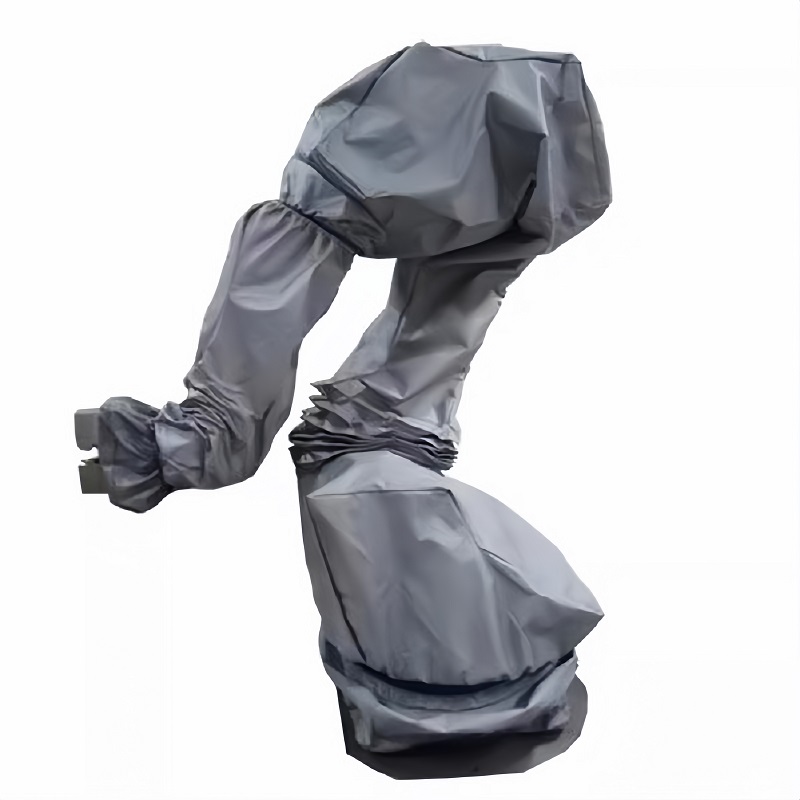
Continuous friction between robot joints and standard covers builds high-voltage static charges. We refer to this rapid energy accumulation as triboelectric generation. As axes rotate, extend, and retract, the fabric rubs constantly against itself or the metal chassis. Traditional synthetic textiles act as excellent insulators. They hold onto these electrical charges rather than letting them dissipate. Over a standard production shift, this repetitive motion generates thousands of volts of static electricity right at the robotic joint.
Built-up electrical charges eventually seek a path to ground. This sudden release causes microscopic electrostatic discharges. Proximity sensors and advanced vision systems suffer immediately under these conditions. Micro-arcing actively damages delicate internal communication buses. Engineers often struggle to diagnose these intermittent data drops. Over time, recurring electrical shocks degrade printed circuit boards. This invisible damage ultimately guarantees premature component failure across the robotic cell.
Static-charged surfaces actively attract airborne dust and environmental debris. They pull in overspray aggressively during painting or coating operations. A highly charged surface basically functions like an industrial magnet. Contaminants stick stubbornly to the fabric exterior. Airborne abrasives eventually migrate toward critical mechanical joints. This contamination accelerates wear on sensitive seals, bearings, and lubrication points. Reducing this surface charge prevents destructive particles from accumulating near the machinery.
Static directly harms your manufacturing yield. Defect rates soar when ambient static interferes during delicate processes. In semiconductor wafer production, particle attraction ruins entire batches instantly. Automotive paint finishes suffer from severe dust inclusions when static fields pull debris into wet coatings. Analyzing these defect rates reveals massive financial impacts. Uncontrolled electrostatic fields cost facilities heavily through rejected parts, intensive rework, and compromised product integrity.
Deploying a purpose-built Anti-static Cover shields servo motors and critical linkages simultaneously. You block physical ingress while neutralizing dangerous electrical anomalies. This dual-action defense extends the mechanical life of your automation assets significantly. Components operate within a clean, electrically stable environment. By eliminating micro-arcing, you protect the fundamental hardware infrastructure of your manufacturing lines.
Precision robotics rely on flawless data inputs. Ambient static interference easily skews sensitive payload sensors. Spatial positioning sensors lose accuracy when exposed to erratic electrical fields. Proper anti-static fabrics prevent these fields from disrupting vital calibration data. Your robotic arms maintain their precise programming paths. Consistent data ensures high repeatability across complex manufacturing sequences.
Unscheduled emergency cleanings disrupt entire production schedules. Recalibration tasks consume valuable engineering hours unnecessarily. A robust anti-static barrier drastically reduces the frequency of these reactive maintenance events. Your maintenance teams can focus on scheduled preventative care instead of fighting sudden sensor faults. We can track this operational efficiency using a standard performance chart.
Chart: Maintenance Cycle Improvements | ||
Maintenance Metric | Standard Fabric Cover | Anti-static Cover Solution |
|---|---|---|
Sensor Recalibration | Weekly due to ESD drift | Quarterly (Standard schedule) |
Surface Cleaning | Daily (High dust attraction) | Monthly (Dust repelled) |
Unscheduled Downtime | High (Erratic sensor faults) | Minimal to None |
Static-sensitive products move through robotic cells constantly. Ambient electrical fields generated by robot motion can ruin these items. Neutralizing this static ensures your manufacturing yields remain uncompromised. You protect delicate printed circuit boards and flawless painted surfaces from invisible electrical damage. Consistent yield protection directly boosts facility profitability.
Understanding fabric construction remains crucial for proper specification. We evaluate fabrics based on their specific anti-static mechanisms. Topical treatments offer a lower initial procurement cost. Manufacturers spray or dip standard fabrics into chemical anti-static agents. However, these surface treatments degrade rapidly after industrial washing. Prolonged friction also wears the chemical layer away quickly.
Conversely, intrinsically conductive fabrics utilize woven conductive grids. Engineers weave carbon or metallic threads directly into the base textile. This structural approach requires a higher upfront investment. Yet, it provides permanent electrostatic dissipation characteristics. The anti-static properties survive heavy friction and aggressive laundering cycles.
Fabric Mechanism Comparison | ||
Feature | Topical Chemical Treatment | Woven Conductive Grid (Intrinsic) |
|---|---|---|
Mechanism | Chemical coating applied to surface | Carbon/metal threads woven into fabric |
Durability | Low (Washes out over time) | High (Permanent structural property) |
Initial Cost | Lower | Higher |
Best Use Case | Short-term, disposable applications | Long-term, heavy-duty industrial use |
Engineers must define acceptable ohm/square ranges for their specific applications. Effective materials dissipate charges safely and predictably. They avoid creating a direct short-circuit risk near high-voltage equipment. Industry standards typically define dissipative materials as having a surface resistivity between 10^5 and 10^9 ohms/square. Materials measuring below this range become highly conductive. Highly conductive materials pose severe shock hazards if they touch exposed electrical terminals.
You must assess anti-static materials against secondary environmental threats. Static protection alone is rarely sufficient. For robotic welding applications, the fabric must feature heavy flame retardancy. Machining operations require extreme chemical resistance against synthetic coolants. Food processing spaces demand FDA-compliant materials. Material scientists engineer multi-layered composites to handle these overlapping threats effectively.
Combustible dust and solvent-rich environments present severe, immediate ignition risks. Regulatory bodies strictly govern equipment used within these hazardous zones. Anti-static covers are mandatory in these spaces. They prevent spark-induced ignition completely. Proper material selection satisfies critical ATEX directives for explosive atmospheres. Failing to neutralize triboelectric charges in an ATEX zone invites catastrophic facility accidents.
Industrial protective equipment must align seamlessly with workplace safety mandates. OSHA outlines specific rules regarding electrical grounding. They also govern safe equipment housing practices. Facility managers hold the responsibility for mitigating electrical hazards. Implementing properly specified anti-static barriers ensures strict facility compliance. You protect personnel from accidental shocks while securing your hardware investments.
Pharmaceutical and semiconductor applications demand extreme environmental controls. You must balance aggressive anti-static requirements against strict non-shedding standards. Standard carbon-grid fabrics might shed microscopic particles during heavy flexing. Cleanroom protocols prohibit this particulate generation. Outgassing rules also dictate precise material selection for ISO-certified cleanrooms. Manufacturers supply specialized, low-linting anti-static textiles designed specifically for these pristine environments.
Proper installation requires an absolute focus on grounding. This represents a critical operational reality. An anti-static fabric proves ineffective if you skip the grounding phase. More importantly, it becomes potentially dangerous. An ungrounded conductive matrix acts like a capacitor. It stores a massive electrical charge instead of dissipating it. You must tether the conductive fabric securely to the facility’s structural grounding system. We always verify these grounding paths using professional multimeters before initiating production.
Industrial textiles must accommodate complex, high-speed robotic movements. You must manage the trade-off between dense conductive fabrics and required robotic flexibility. Engineers often design "robot flex suits" specifically for this reason. Heavy, rigid materials restrict joint movement severely. This restriction causes servo motor strain and premature wear. Custom tailoring ensures unimpeded robotic flexibility while maintaining full ESD protection.
Facilities need established protocols for routine cleaning. Industrial laundering easily ruins delicate anti-static properties. Operators must utilize specific non-detergent solutions. Specialized cleaning agents avoid stripping the conductive properties from the fabric. Standard commercial detergents often contain fabric softeners or bleaches. These additives coat the conductive fibers and destroy their dissipative capabilities. Strict laundering guidelines protect your operational investment.
Sourcing the right protection requires a highly systematic approach. Map out the exact exposure risks across your facility first. Note any aggressive solvents, extreme ambient heat, or explosive dust present in the cell. This environmental mapping dictates your necessary base material. You define the core textile before you add the specific anti-static requirement.
Never guess regarding material capabilities. Always verify surface resistance numbers directly through official documentation. Request a comprehensive Technical Data Sheet (TDS) from every potential vendor. Ask for certified third-party testing data. This documentation guarantees true ESD compliance. It also provides necessary proof for your internal safety audits.
Off-the-shelf options generally fail in complex robotic applications. Prioritize manufacturers offering advanced 3D-mapped custom fits. Proper 3D tailoring prevents dangerous fabric bunching. It eliminates excessive friction along primary joints. A well-fitted suit moves naturally alongside the mechanical arm. This precision fit minimizes triboelectric charging at the source.
We strongly recommend a structured pilot program before any large-scale purchase. Follow these specific steps to validate the solution:
Order a single unit: Procure one custom-fitted cover for your most active robotic cell.
Run a 60-day trial: Operate the robot under normal, high-volume production conditions.
Monitor grounding integrity: Test the grounding tethers weekly to ensure continuous electrical dissipation.
Inspect articulation wear: Check major joint areas for fabric stress, thinning, or bunching.
Measure particulate accumulation: Visually confirm a reduction in dust and overspray attraction.
Only proceed to a facility-wide rollout after declaring the pilot test successful.
Anti-static protection serves as a fundamental requirement for modern risk management in specialized manufacturing. It goes far beyond being a simple operational luxury. By neutralizing triboelectric charges, you proactively manage severe risks. You protect delicate internal components, external proximity sensors, and the manufactured products themselves.
The upfront premium for integrated conductive materials pays off rapidly. You systematically eliminate ESD-related downtime. This targeted investment prolongs overall equipment lifecycles and keeps automated production lines running smoothly.
Start by auditing your current robotic workcells for static accumulation and dust attraction today. Consult with specialized industrial textile engineers regarding your specific environmental hazards. Finally, draft a comprehensive specification sheet to secure reliable, permanent protection for your automation assets.
A: The lifespan depends heavily on duty cycles and material construction. Intrinsic woven conductive fabrics routinely last 12 to 24 months in continuous operation. Topical chemical treatments degrade much faster, often requiring replacement after 3 to 6 months of heavy friction or repeated washing.
A: Yes. The cover must physically channel static electricity away from the robot chassis safely. You must attach a dedicated grounding wire from the conductive fabric matrix directly to a verified facility ground point to prevent dangerous charge accumulation.
A: Absolutely. Manufacturers engineer multi-layered material composites to handle overlapping environmental threats. A cover can feature a heat-reflective outer layer, a waterproof membrane in the middle, and a conductive grid backing to dissipate static safely.
A: You should use a handheld electrostatic field meter. Hold the meter safely near the fabric surface during active robotic cycles. If the meter reads high voltage spikes as the joints articulate, your current cover is generating harmful triboelectric charges.


