
English 
T: +86-21-55896873
E: info@youguard.cn
E: info@youguard.cn
8th Floor, Building 3, 999 Jiangyue Road, Minhang District, Shanghai
Views: 0 Author: Site Editor Publish Time: 2026-06-17 Origin: Site


Heavy-duty automotive applications present a severe operational challenge for facility managers. Automotive environments demand massive airflow while simultaneously requiring high-capacity dust retention. Managers in commercial fleet maintenance and industrial paint booths face this constant balancing act daily. Historically, facilities relied heavily on standard rigid cartridges or flat panel filters. Modern demands push operators toward high-capacity extended surface options instead. This transition directly addresses the sheer volume of particulate matter generated during industrial automotive processes.
Choosing an optimal system is rarely about declaring one option inherently superior. You must align your choice alongside physical space availability, rigorous maintenance intervals, and overall operational goals. Readers will discover the architectural differences between traditional designs and pocket-style alternatives. We will explore how physical shape strictly dictates aerodynamic performance and everyday efficiency. You will learn to evaluate functional lifespan, pressure drops, and implementation risks for your specific automotive application.
Air filter bag systems excel in environments requiring massive dust-holding capacity (DHC) and sustained low pressure drops.
Traditional pleated or panel filters offer easier rapid deployment, standard sizing, and compact installation footprints.
The choice of underlying filtration media (synthetic vs. fiberglass) often dictates performance as much as the physical shape of the filter.
ROI depends strictly on maintenance labor costs and replacement frequency, not just the initial unit price.
Retrofitting a traditional system to accept bag filters requires upfront enclosure modifications that must be factored into the total cost of ownership.
Understanding the geometric differences between filter types clarifies their operational behavior. Manufacturers engineer each design to manipulate airflow in specific ways. Shape determines how particles accumulate over time. It also dictates how the surrounding air handling unit must be built.
Traditional filters rely on rigid frames. Manufacturers standardize these dimensions across various industries to ensure universal compatibility. Pleated models pack extensive surface area into extremely shallow depths. They fold the material tightly to maximize physical capture space.
Airflow strikes this flat face directly during operation. Particulates accumulate rapidly on the front surface of the pleats. This rapid buildup blocks vital air channels prematurely. You will notice immediate pressure drop spikes once this face-loading occurs. The system works efficiently at first but quickly loses permeability. Traditional panels fit perfectly into tight, constrained spaces. They require minimal structural depth to operate effectively.
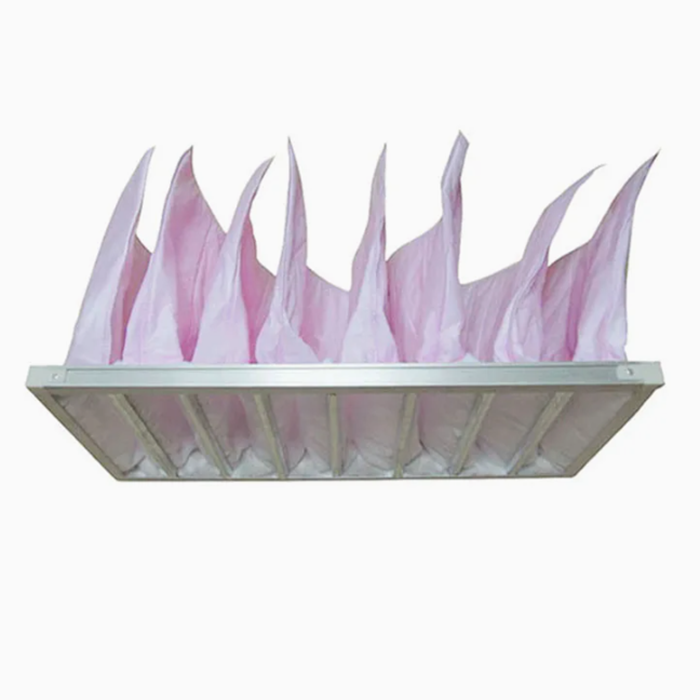
Extended surface designs take a radically different approach to air management. An Air Filter Bag utilizes deep aerodynamic sleeves to manipulate the airstream. These elongated pockets drastically increase the total available media area. Airflow channels deeply into these flexible pockets upon entering the system.
This aerodynamic tunneling prevents premature face-loading. Dust distributes evenly along the entire length of the extended pocket. This uniform distribution maintains open air channels significantly longer. However, you must accommodate this extended geometry. Pocket filters require significantly more physical depth in the air handling unit. The intake housing must allow the pockets to inflate completely without obstruction. If the pockets touch the housing walls, they lose their aerodynamic advantage.
Evaluating filtration performance requires objective metrics rather than generic claims. We must look at how physical design impacts real-world endurance. Engineers measure performance through dust capacity, pressure curves, and micron interception. These dimensions reveal how a system behaves under extreme automotive stress.
Dust holding capacity defines how much particulate mass a unit captures before failing. Deep pocket designs offer superior DHC mechanically. They provide exponentially more surface area for dust to settle. This makes them ideal for high-particulate automotive manufacturing spaces. Heavy-duty fleet intakes also benefit immensely from this massive capacity. Traditional flat models naturally possess lower DHC. Operators must schedule frequent change-outs strictly to prevent severe airflow restriction. You cannot stretch the lifespan of a flat panel in a heavily polluted environment.
Every barrier introduces resistance into an airstream. Clean filters start with a low initial pressure drop. Dirty filters restrict air forcefully as they fill with dust. You must assess the energy penalty in large facilities carefully. You must also evaluate performance drag in heavy vehicles.
Extended pocket designs maintain a remarkably lower sustained pressure drop. They keep air flowing freely over a much longer period. Traditional pleated designs experience sharp pressure spikes quickly. This steep curve forces facility motors to work harder. It reduces engine efficiency in heavy vehicles drastically. Maintaining a flat pressure curve optimizes overall operational energy use.
You must evaluate how each system handles PM2.5 and PM10 particulates accurately. Avoid relying on generalized marketing claims about "better filtration." Base your objective comparison on standard industry test variables instead. Both geometric shapes can achieve high-efficiency micron interception. The difference lies in how long they maintain that interception rate without choking. Extended pockets intercept fine overspray and brake dust continuously without sealing off the airflow. Pleated panels capture the same fine particles but clog much faster under identical loads.
Performance Comparison Chart | ||
Evaluation Dimension | Traditional Pleated Panel | Extended Pocket System |
|---|---|---|
Dust Holding Capacity | Low to Moderate | Exceptionally High |
Pressure Drop Curve | Steep (rises rapidly) | Flat (rises slowly) |
Space Requirement | Minimal (2 to 4 inches) | Deep (12 to 36 inches) |
PM2.5 Interception Stability | Degrades quickly under heavy load | Stable over extended periods |
The structural shape means nothing without high-quality material science backing it up. The underlying material dictates real-world success in extreme environments. Engineers select materials based on stress resistance and particle capture rates.
Structural design relies entirely on the quality of the selected Filtration Media. A deep pocket design fails if the fabric tears easily. A tight pleat collapses if the material lacks rigidity. Material science dictates how effectively a barrier handles moisture, vibration, and high-velocity air. Choosing the right fabric determines whether you protect your equipment or expose it to catastrophic damage.
Industry standards often utilize fiberglass materials. Fiberglass remains highly effective at capturing minute particles. However, it proves highly prone to shedding under extreme mechanical stress. Heavy equipment vibrations break delicate glass fibers effortlessly. You do not want broken fibers migrating into sensitive automotive systems.
Multi-layer synthetics dominate premium systems today. Manufacturers utilize synthetics to provide superior mechanical strength under severe stress. They resist high moisture levels found in automotive wash bays or humid climates. Synthetics ensure reliable particle capture without shedding microscopic fibers. They protect your engine components and maintain pristine paint booth environments perfectly.
You must rigorously evaluate the risk of material breakdown. High-velocity airstreams stress the fabric heavily. Subpar materials degrade quickly when exposed to continuous aerodynamic pounding. Particulates and broken fibers will enter the engine or facility downstream. This media migration ruins paint finishes instantly. It scores engine cylinder walls over time. Always verify material durability under peak velocity conditions before installation. Modern synthetic options virtually eliminate this specific migration risk entirely.
Operational efficiency depends heavily on your maintenance procedures. Facilities must balance physical labor, system downtime, and waste management. Choosing a filtration architecture directly impacts how your maintenance team operates daily. You must assess the physical realities of swapping out massive industrial units.
Frequent maintenance schedules demand intensive physical labor. Standard panels require highly scheduled, frequent change-outs to prevent airflow restriction. You must send technicians to swap these units monthly or even weekly in heavy-dust zones. Every single swap forces you to shut down the air handling unit. You lose critical operational time during each mandatory maintenance window.
Upgrading to a high-capacity extended system alters this reality completely. Extended pocket designs handle massive particulate loads for months. You can often shift from a monthly swap schedule to a quarterly or bi-annual routine. You recover hundreds of operational hours annually. Your maintenance team reallocates their time to more critical facility tasks. Reducing physical intervention lowers the risk of improper installation during hurried maintenance windows.
Used filters generate massive amounts of industrial waste. Waste management presents a serious logistical challenge for large automotive facilities. Rigid metal or plastic-framed traditional panels consume immense dumpster space quickly. You cannot compress or fold them easily. They fill disposal bins rapidly, requiring frequent waste removal services.
Extended flexible systems solve this physical space issue beautifully. You can crush flexible pocket filters entirely flat after removing them. They roll up into compact bundles easily. This dramatically reduces your overall waste footprint. Less physical waste means much easier handling for your technicians. It streamlines the disposal process across your entire automotive facility.
You cannot blindly upgrade every system to an extended pocket design. Engineering realities dictate what you can actually install safely. Facility managers must conduct thorough structural audits before committing to any architectural changes. Knowing when to stick with your current setup is crucial.
Limited Housing Depth: You possess extremely shallow intake housings. Extended pockets require massive downstream clearance to inflate fully.
Strict OEM Constraints: Your equipment operates under rigid warranty conditions. Manufacturers may mandate the use of specific rigid pleated models.
Low-Dust Environments: Your facility generates very little particulate matter. Standard service intervals easily meet your operational demands without causing pressure drop spikes.
Structural Incompatibility: The current air handling unit lacks the robust holding frames required to support heavy, dust-filled extended pockets safely.
You face continuous high particulate loads daily.
Your environment causes premature traditional filter failure repeatedly.
You experience severe operational delays due to frequent maintenance downtime.
Your facility motors struggle against steep, sustained pressure drops.
You must address the engineering reality of modifying intake housings. You cannot simply shove a 24-inch deep flexible unit into a 2-inch standard slot. Retrofitting requires significant enclosure modifications upfront. You must secure adequate clearance so the pockets never touch the back wall.
Sealing integrity presents the biggest implementation risk. A poorly sealed upgrade leaks unfiltered air immediately. Air always follows the path of least resistance. If your new holding frame lacks a perfect perimeter seal, contaminated air bypasses the fabric entirely. Ensure your technicians prioritize flawless sealing integrity during any retrofitting project. Conduct a proper airflow test immediately after modifying the enclosure.
Prioritize compact traditional options for tight spaces and strict standard compliance.
Select high-capacity extended pocket designs for low-maintenance longevity in exceptionally dusty environments.
Conduct a thorough facility or fleet structural audit before executing a physical switch.
Measure your current pressure drop curves and document your exact replacement frequencies accurately.
Consult an experienced filtration engineer to evaluate your target automotive application thoroughly.
A: Yes, they generally require robust holding frames. They also need adequate downstream clearance. This empty space allows the flexible pockets to inflate fully without physical obstruction. Without proper hardware, the pockets may collapse, ruining their aerodynamic advantage.
A: Yes. Moving to a lower-resistance synthetic media reduces the total energy required to pull air through the system. This lowers your daily operating burden. High-quality synthetics maintain open air channels much longer than tightly packed traditional materials.
A: Replacement rates are highly variable by environment. However, extended pocket designs typically last 2 to 4 times longer than standard pleated panel models. Their massive extended surface area distributes the dust load much more efficiently over time.
A: Most commercial options easily meet strict ASHRAE or ISO 16890 standards. They provide excellent particulate interception. However, you must always cross-reference OEM specifications directly for on-highway vehicle applications to ensure strict warranty compliance.


